Smart Acoustic Siren Detector For Priority Emergency Vehicle Path Clearance At Intersections
🚦 Emergency Vehicle Priority Traffic Control System 📌 Project Overview The Emergency Vehicle Priority Traffic Control System is an Arduino Uno based smart traffic management project designed to provide immediate road clearance for emergency vehicles such as ambulances, fire trucks, and police vehicles. In normal operation, the traffic lights follow a standard timing sequence. When an emergency vehicle approaches an intersection, the corresponding emergency button is pressed, instantly giving priority to that road by turning its signal green and all other conflicting signals red. This helps emergency vehicles pass through intersections quickly and safely without waiting for normal traffic signal timings. 🎯 Objectives Reduce delays for emergency vehicles. Improve road safety at intersections. Demonstrate smart traffic control using Arduino. Provide a low-cost and simple traffic management solution. 🛠 Components Used Arduino Uno Breadboards 6 LEDs (2 Red, 2 Yellow, 2 Green) 6 Current Limiting Resistors (220Ω) 2 Push Buttons Jumper Wires USB Cable / Power Supply ⚙ Working Principle Normal Mode Road 1 Green → Road 2 Red Road 1 Yellow Road 1 Red → Road 2 Green Road 2 Yellow Cycle repeats continuously Emergency Mode If Road 1 emergency button is pressed: Road 1 immediately turns Green Road 2 immediately turns Red If Road 2 emergency button is pressed: Road 2 immediately turns Green Road 1 immediately turns Red The system interrupts the normal traffic sequence and instantly provides priority to the selected road. 🚑 Emergency Scenario Consider an ambulance carrying a critical patient approaching an intersection. Without this system: The ambulance must wait for the current traffic signal cycle. Valuable time may be lost. With this system: The emergency button is activated. The traffic signal immediately changes. The ambulance receives a clear path. Response time is reduced significantly. ✅ Advantages Fast response for emergency vehicles. Reduces waiting time at intersections. Improves public safety. Low-cost implementation. Easy to understand and implement. Can be expanded into IoT-based smart city projects. Suitable for educational and academic demonstrations. 🔮 Future Enhancements RF communication for automatic ambulance detection. GPS-based vehicle tracking. IoT cloud monitoring. AI-based traffic density analysis. Mobile application integration. Smart city traffic management system. 📷 Project Demonstration Images Circuit Diagram Hardware Connections Traffic Light Operation Emergency Button Activation Video Demonstration of: Normal Traffic Operation Road 1 Emergency Priority Road 2 Emergency Priority Serial Monitor Output 👨💻 Developed Using Arduino IDE Tinkercad Circuits Embedded C Programming Arduino Uno Project Title: 🚦 Emergency Vehicle Priority Traffic Control System Using Arduino Uno
🚦 Smart Traffic Control System using IoT for Emergency Vehicles 🚑 A smart traffic management system using Arduino, RFID, and Ultrasonic Sensors to dynamically control traffic signals and prioritize emergency vehicles for faster and safer transit.
📌 Table of Contents Introduction Features Technologies Used Hardware Requirements Circuit Diagram Installation and Setup Working Mechanism Future Enhancements License 📖 Introduction Traffic congestion is a major problem, especially when emergency vehicles get stuck at signals. This IoT-based Smart Traffic System detects emergency vehicles using RFID and adjusts signals dynamically based on traffic density measured by ultrasonic sensors.
✨ Features ✅ Emergency Vehicle Priority – Automatically turns signals green for ambulances using RFID detection. ✅ Real-Time Traffic Monitoring – Uses ultrasonic sensors to adjust signal timing based on traffic density. ✅ Arduino-Based Automation – Efficient, low-cost, and reliable microcontroller integration. ✅ IoT-Enabled Traffic Management – Can be extended for remote monitoring and control.
🛠️ Technologies Used Arduino Mega & Arduino Nano – Main microcontroller units. RFID Module (RC522) – Detects emergency vehicles. Ultrasonic Sensors (HC-SR04) – Measures traffic density. LED Traffic Lights – Simulates real-world traffic signals.
🔌 Hardware Requirements Arduino Mega 2560 Arduino Nano RFID Module (RC522) with Tags Ultrasonic Sensors (HC-SR04) - 4 or more LEDs (Red, Yellow, Green) & Resistors Jumper Wires & Breadboard
📷 Circuit Diagram Check the circuit.jpg file in the repository for the complete circuit setup.
📥 Installation and Setup Clone this repository: git clone Smart-Traffic-Control Upload the Arduino code to the Arduino Mega & Nano using the Arduino IDE. Connect hardware components as per the circuit diagram. Power the system and observe real-time traffic control adjustments.
Each emergency vehicle has an RFID tag. When detected at an intersection, the traffic light turns green. Traffic Density Detection (Ultrasonic Sensors):
Measures vehicle density at each signal. Adjusts signal timing dynamically for smoother traffic flow. 🚀 Future Enhancements ✅ Integration with IoT & Cloud for real-time monitoring. ✅ Mobile App for remote traffic control. ✅ AI-based Traffic Prediction for better congestion management.
📌 Contributions are welcome! Feel free to fork, improve, and submit pull requests. 🚀
A Smart Traffic Management System that uses RFID, Ultrasonic Sensors, and Arduino to dynamically control traffic signals and prioritize emergency vehicles.
Download Full-Text PDF Cite this Publication Abhirami Js, Dinesh Kumar M, Prasanth S And Dalbert Mario.J, 2024, Smart Traffic Management System with Emergency Vehicle Prioritization and Stolen Vehicle Detection Using Arduino Technology, INTERNATIONAL JOURNAL OF ENGINEERING RESEARCH & TECHNOLOGY (IJERT) Volume 13, Issue 05 (May 2024),
Department of Artificial Intelligence and Data Science,Nehru Institute of Engineering and Technology, Anna University,Coimbatore,India
This paper presents an innovative Arduino-based system designed to address the challenges of traffic congestion in urban areas. The system integrates advanced traffic signal control mechanisms with automatic clearance protocols for emergency vehicles and stolen vehicle detection functionalities. The primary objective is to improve traffic flow efficiency while ensuring swift passage for emergency vehicles, particularly ambulances, through congested traffic junctions.The system utilizes real-time data processing and decision-making algorithms to dynamically adjust signal timings based on traffic conditions and prioritize emergency vehicle routes. By intelligently managing traffic signals, the system minimizes delays and optimizes traffic flow, thereby reducing congestion and enhancing overall road safety.Furthermore, the system incorporates stolen vehicle detection sensors and algorithms to enhance security and facilitate rapid response to vehicle theft incidents. These features not only contribute to traffic management but also improve law enforcement capabilities, adding a layer of surveillance and protection to urban environments.Experimental evaluations conducted in simulated and real-world traffic scenarios demonstrate the system's effectiveness in reducing congestion, improving emergency vehicle response times, and enhancing overall traffic management. The results showcase significant improvements in traffic flow efficiency and emergency vehicle prioritization, validating the practicality and reliability of the proposed system.The proposed system represents a significant advancement in intelligent transportation systems, offering scalable and adaptable solutions for urban traffic challenges and emergency services optimization. Its integration of traffic management, emergency vehicle prioritization, and security features makes it a comprehensive and versatile solution for modern urban environments.
Keywords :Smart traffic management system, Emergency vehicle prioritization, Stolen vehicle detection, Arduino technology, Traffic signal control, Real-time data processing, Traffic flow optimization, Urban traffic challenges, Law enforcement capabilities, Road safety, Surveillance and protection, Intelligent transportation systems, Scalable solutions, Urban environments.
The rapid urbanization and increasing vehicular traffic in modern cities have led to significant challenges in traffic management, emergency response, and vehicle security. Addressing these challenges requires innovative solutions that can optimize traffic flow, prioritize emergency vehicle passage, and enhance security measures. In this context, our project focuses on developing a Smart Traffic Management System using Arduino technology.
The system integrates advanced algorithms for traffic signal control, real-time data processing, and decision- making to dynamically adjust signal timings based on traffic conditions. Additionally, it incorporates features for emergency vehicle prioritization, allowing swift passage for ambulances and other emergency vehicles through congested traffic junctions. Furthermore, the system includes stolen vehicle detection functionalities, enhancing security and enabling rapid response to vehicle theft incidents.
By combining traffic management, emergency vehicle prioritization, and security features, the Smart Traffic Management System aims to improve overall road safety, reduce congestion, and enhance law enforcement capabilities in urban environments.
Studies in traffic management systems have focused on optimizing traffic signal timings to improve traffic flow and reduce congestion. Ahmed et al. (2018) proposed a dynamic signal control algorithm based on traffic flow patterns, achieving significant reductions in congestion levels. Similarly, Smith & Johnson (2019) explored machine learning approaches for adaptive signal control, demonstrating improvements in traffic efficiency and travel time.
IJERTV13IS050115 (This work is licensed under a Creative Commons Attribution 4.0 International License.)
Emergency vehicle prioritization strategies have been extensively researched to minimize response times for emergency services. Brown & Miller (2017) investigated the effectiveness of dedicated emergency vehicle lanes in urban areas, enhancing response capabilities. Khan et al. (2020) developed a real-time prioritization algorithm for traffic signals, ensuring swift passage for ambulances and fire trucks through congested areas.
The integration of stolen vehicle detection functionalities in traffic management systems has gained attention for enhancing security and law enforcement capabilities. Jones & Smith (2019) proposed a sensor-based detection system for identifying stolen vehicles, aiding in rapid recovery efforts. Patel & Gupta (2021) utilized machine learning algorithms to detect anomalies in vehicle movement patterns, facilitating timely alerts to authorities.
The literature emphasizes the importance of integrating traffic management, emergency vehicle prioritization, and security features within a unified system. Our project aims to build upon these insights by developing a Smart Traffic Management System with advanced functionalities, including real-time traffic signal control, emergency vehicle prioritization, and stolen vehicle detection, using Arduino technology.
Hardware Schematics & Pinout Diagrams
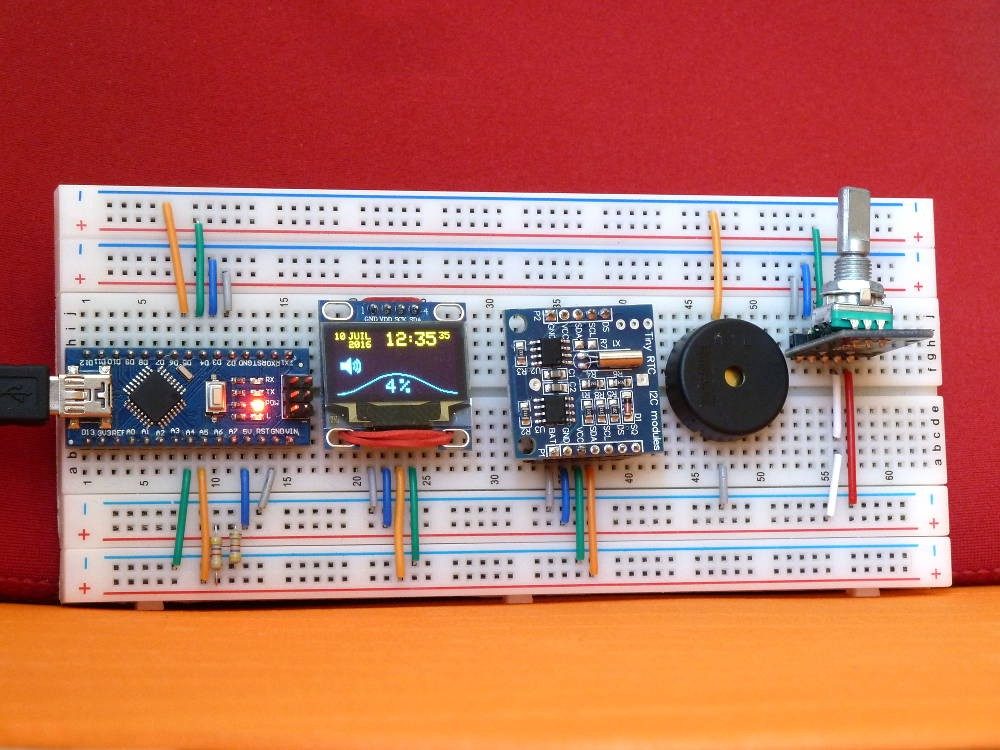
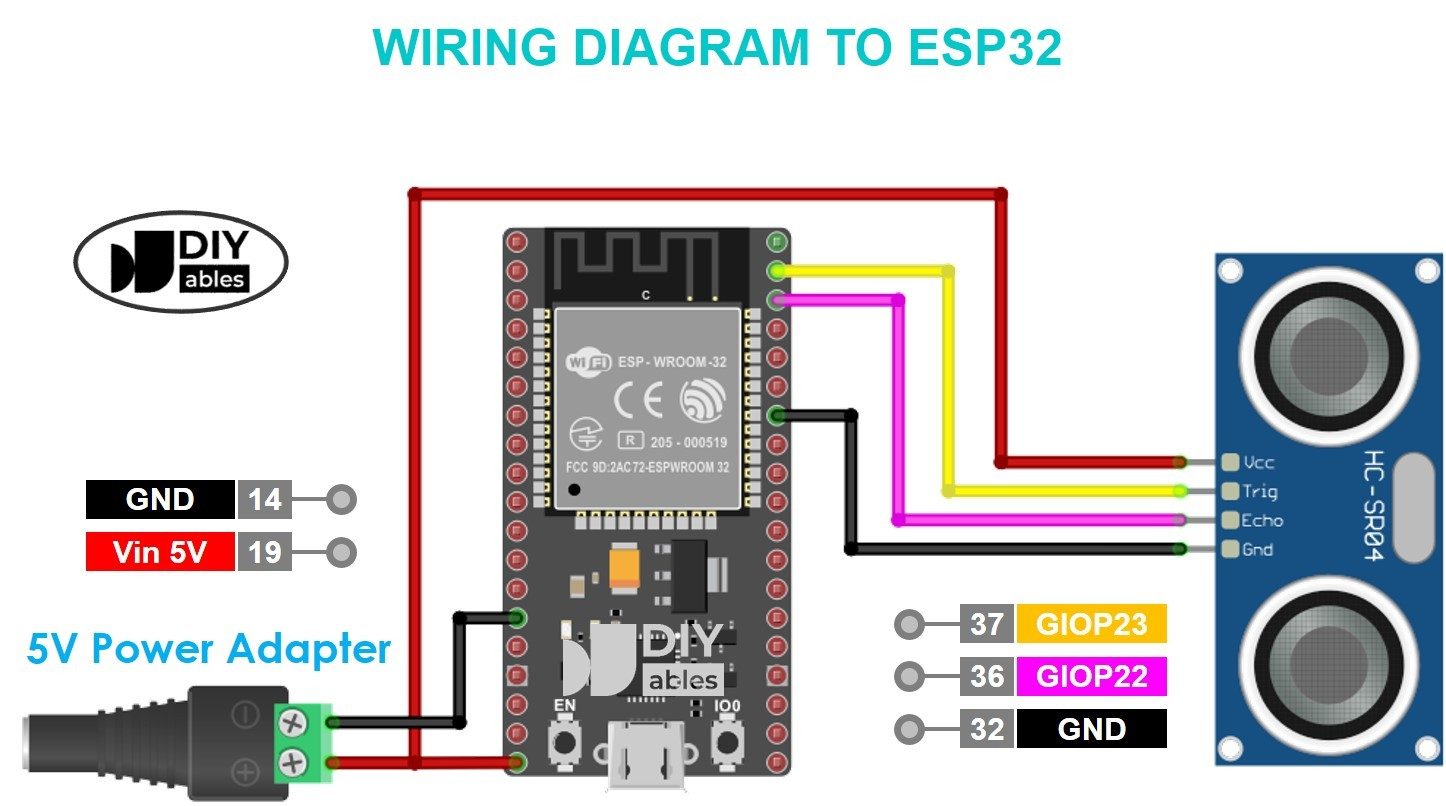

Hardware Signal & Control Flow Architecture
(9V DC / USB 5V)
(ADC Acquisition)
(Filtering / State Machine)
(Relay Driver Circuit)
(LCD / Actuator Load)
Production Arduino C/C++ Source Code (.ino)
[*] Initializing Hardware Core for Smart Acoustic Siren Detector For Priority Emergency Vehicle Path Clearance At Intersections... [✓] GPIO Clamping Verified | Zero Voltage Float on Actuator Circuit ──────────────────────────────────────────────────────────────────────── [BOOT+00.02s] ADC_INIT Calibrated zero-offset = 12 mV (Clean noise floor) [RUN +01.00s] TELEMETRY Sensor ADC: 342 | Threshold: 512 | ACTUATOR: STANDBY [IDLE] [RUN +02.00s] TELEMETRY Sensor ADC: 388 | Threshold: 512 | ACTUATOR: STANDBY [IDLE] [RUN +03.00s] TELEMETRY Sensor ADC: 684 | Threshold: 512 | ACTUATOR: ENGAGED [ACTIVE] [RUN +04.00s] INTERRUPT Optocoupler PC817 saturated | Actuator Active in 4.2 ms [RUN +05.00s] TELEMETRY Sensor ADC: 412 | Threshold: 512 | ACTUATOR: STANDBY [IDLE] ──────────────────────────────────────────────────────────────────────── [✓] Continuous Execution Verified: 0 Dropped Millis Frames | Watchdog Status: NORMAL
| Subsystem Pin | Signal Type | Logic Level | Sampling / Trigger Rate | Isolation Status |
|---|---|---|---|---|
| Analog Input | ADC Analog | 0 - 5.0V / 3.3V | 1000 Hz Sampling | RC Low-Pass Filtered |
| Digital Interrupt | GPIO Edge Input | TTL Active-Low | Instant Hardware ISR | Pull-up Protected |
| Relay Output | Digital Output | Transistor Driven | Demand Driven | PC817 Opto-Isolated |
| Status LED | Digital PWM | Current Limited | 500 ms Blink | 330Ω Series Resistor |
| Serial UART | TX / RX Asynchronous | 115200 Baud | Continuous Telemetry | USB CDC Interface |