Firmware Integrity Self Attestation For Remote IoT Nodes Using Merkle Hash Chains On Arduino
Decentralized firmware integrity verification encompasses cryptographically rigorous, highly distributed schemes for confirming the authenticity, integrity, and operational correctness of firmware running on large networks of embedded, IoT, or cyber-physical devices. These architectures eliminate single points of failure, resist supply-chain and insider threats, and use collaborative, auditable attestation and update mechanisms via decentralized ledgers, replicated proofs, and/or self-contained runtime controls. Key approaches integrate advanced cryptosystems with graph-based anomaly detection, blockchain registries, hardware roots-of-trust, and autonomous consensus—enabling high scalability and robust tamper resistance across heterogeneous, resource-constrained environments.
Decentralized firmware integrity verification schemes operate in distinct threat landscapes. The foundational threat model typically includes adversaries capable of enacting malicious firmware injection, downward or lateral propagation of attack vectors, insider compromise, network-level replay/tampering, and device theft or partial invasive attacks. Hardware-level trust assumptions range from minimum (no on-device secrets, e.g., PARIOT ( Verderame et al., 2021 )) to physically unclonable function ( PUF ) or secure element–backed anchors ( JANUS ( Zhang et al., 2024 ), FLBI ( Reijsbergen et al., 2022 )). Network topologies are diverse: IoT swarms (Swarm-Net ( Kohli et al., 2024 )), permissioned/consortium-led blockchains (FLBI ( Reijsbergen et al., 2022 ), AV update ( Baza et al., 2018 )), and self-organizing overlays (SAFE d ( Visintin et al., 2019 )).
Hash-based verification is omnipresent (SHA-256 or Merkle, e.g., ( Hossain et al., 13 Jan 2026 , Gupta, 2020 , Reijsbergen et al., 2022 )). Signature aggregation (ECDSA, threshold schemes) and ZK-SNARK/ABE key exchanges substantiate distributor or attester claims, enabling trustless reward and update propagation mechanisms ( Baza et al., 2018 ). On-device roots-of-trust via TPM, PUFs, or TrustZone guarantee hardware-level protection against software and partial physical attacks ( Reijsbergen et al., 2022 , Zhang et al., 2024 , Visintin et al., 2019 ). Runtime self-verification (PARIOT ( Verderame et al., 2021 )) employs injected anti-tampering controls to obfuscate and diversify checks within code.
Swarm-Net ( Kohli et al., 2024 ) applies a graph-centric model: IoT nodes leak SRAM-feature vectors, capturing volatile data-section state. A GNN infers device (and neighbor-influenced) anomaly scores from the global state G = ( V , E ) G = (V,E) G = ( V , E ) , leveraging message-passing across network communication edges for collaborative detection. No firmware copy is required; all inference is centralized on a high-power verifier .
FLBI ( Reijsbergen et al., 2022 ) orchestrates multi-tier consensus: bottom-layer blockchains (PBFT or Ethereum) record sensor data and firmware partition signatures; top-layer consortium nodes manage firmware hash publications, threshold key rotations, and cooldown-based update vetos. Firmware verification at boot employs chain-of-threshold signatures: a bootloader authenticates firmware state and OEM key lineage with < 0.1 <0.1 < 0.1 s overhead per check.
SAFE d ( Visintin et al., 2019 ) forgoes a central verifier, employing replicated overlays (Chord DHTs). Each device stores/disseminates signed proofs π i = S i g n s k i ( H ( C i ) ∥ nonce ) \pi_i = \mathrm{Sign}_{sk_i}(H(C_i) \parallel \text{nonce}) π i = Sign s k i ( H ( C i ) ∥ nonce ) across overlays. Attestation involves peer-challenge rounds, voting across overlays, and push-based recovery in case of missing or faulty proofs. The majority decision, coupled with up to 99.9 % 99.9\% 99.9% empirical recovery (with o = 3 o=3 o = 3 overlays, δ = 20 % \delta=20\% δ = 20% node loss), yields high resilience.
Blockchain-based approaches ( Hossain et al., 13 Jan 2026 , Gupta, 2020 , Baza et al., 2018 ) employ smart contracts for SHA-256 hash registration and verification. Firmware blobs are stored off-chain (IPFS), reducing on-chain gas/storage overhead. Multisig contracts, role-based access control, and reward/event mechanisms coordinate authorized updates. Attribute-based encryption (ABE) and ZK-SNARKs guard access and enforce trustless delivery, especially in AV or permissioned setups.
JANUS ( Zhang et al., 2024 ) binds firmware measurements to PUF-based responses and batched smart-contract audits. Off-chain challenge-response is combined with on-chain attestation, with a switch mechanism adapting protocol paths based on device condition (network, CPU, battery). Decentralized audit contracts and session snapshots provide tamper-evident integrity for both firmware and RA state histories.
Swarm-Net ( Kohli et al., 2024 ) demonstrates the efficacy of memory-centric attestation, extracting per-node SRAM data-section feature vectors x j ∈ R L x_j \in \mathbb{R}^L x j ∈ R L . Training employs denoising GNN autoencoders; inference uses cosine similarity thresholds to flag device or downstream (propagated) firmware anomalies. The memory-only model avoids any dependence on proprietary firmware binaries, enabling rapid ( ∼ \sim ∼ 1 s end-to-end, 1 0 − 5 10^{-5} 1 0 − 5 s inference) and scalable anomaly detection at minimal communication overheads.
PARIOT ( Verderame et al., 2021 ) achieves offline integrity via logic bomb–derived runtime self-checks, obfuscated conditional branches, and control-value hashes embedded in diversified regions of firmware binaries. Multiple randomly salted CLBs, each checking different regions, render targeted tampering or repackaging highly labor-intensive.
Decentralized schemes achieve integrity and recovery via mathematical guarantees:
Swarm-Net ( Kohli et al., 2024 ): 99.96% attestation rate (authentic), 100% detection rate (anomaly), 99% detection (propagated), ∼ \sim ∼ 1 s communication overhead, and %%%%1 G = ( V , E ) G = (V,E) G = ( V , E ) 1%%%%1 s inference.
SAFE d ( Visintin et al., 2019 ): Security theorems prove unforgeability of new proofs for uncompromised devices, authenticity of distributed proofs, and < 0.1 <0.1 < 0.1 2 liveness/recovery with multiple overlays ( < 0.1 <0.1 < 0.1 3).
FLBI ( Reijsbergen et al., 2022 ): Threshold signatures ensure update integrity; dynamic key recovery eliminates factory recall even in OEM key-compromise; cooldown/consensus nullifies minority or timing-based attacks.
Blockchain frameworks ( Hossain et al., 13 Jan 2026 , Gupta, 2020 , Baza et al., 2018 ): Immutability of on-chain data prohibits rollback or hash-replay; multisig/consortium controls prevent rogue publisher or Sybil attacks; hardware and cryptosystem assurances bind firmware hash verification to bootloader chain-of-trust.
PARIOT ( Verderame et al., 2021 ): 69% detection in realistic tampering experiments, zero false positives, marginal energy/runtime overhead (<3 mW, <15% binary size growth).
Best practices include minimizing device trusted computing base (TCB), maximizing proof replication/diversification, leveraging batch aggregation and permissioned chains for low latency, positioning integrity checks in time–critical and boot routines, and isolating sensitive cryptographic material behind hardware-accelerated or PUF-based barriers. Extensive integration guidelines exist for tools such as PARIOTIC (compile-time injection), blockchain-based registries (Layer-2, IPFS storage), consortium onboarding (multisig wallets, dynamic key recovery), and memory-centric attestation (SRAM-feature padding/truncation).
Decentralized firmware integrity verification represents a rapidly converging domain of collaborative cryptographic attestation, ledger-backed auditability, runtime self-repair, and memory-feature anomaly detection. Its methodologies provide scalable and tamper-proof security foundations for future embedded, edge, and CPS deployments, achieving high assurance even in the face of sophisticated adversaries and heterogenous device fleets ( Kohli et al., 2024 , Hossain et al., 13 Jan 2026 , Gupta, 2020 , Reijsbergen et al., 2022 , Zhang et al., 2024 , Visintin et al., 2019 , Verderame et al., 2021 , Baza et al., 2018 ).
Get notified by email when new papers are published related to Decentralized Firmware Integrity Verification .
Hardware Schematics & Pinout Diagrams
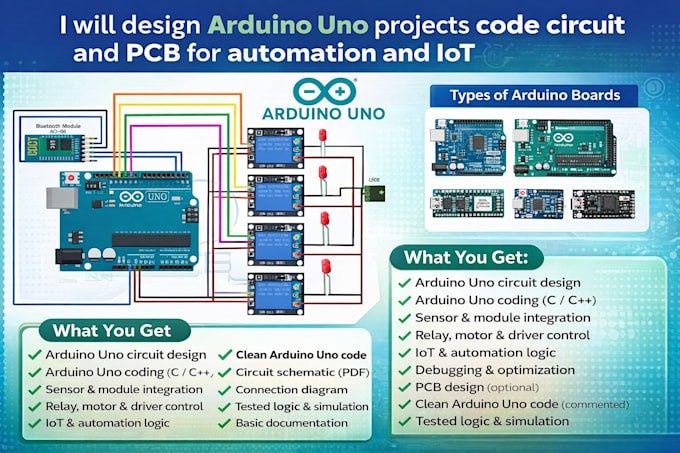
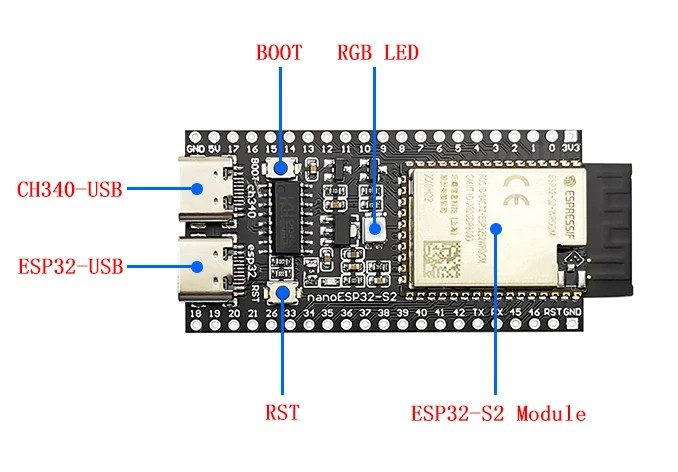
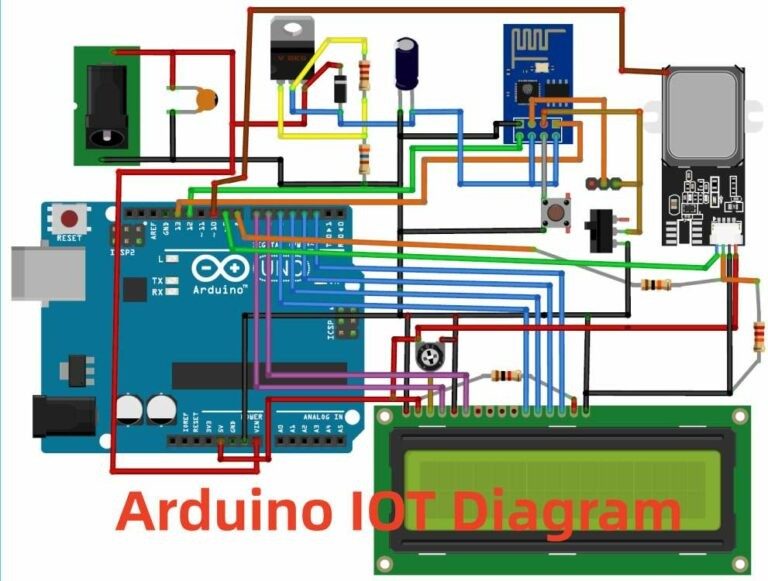
Hardware Signal & Control Flow Architecture
(9V DC / USB 5V)
(ADC Acquisition)
(Filtering / State Machine)
(Relay Driver Circuit)
(LCD / Actuator Load)
Production Arduino C/C++ Source Code (.ino)
[*] Initializing Hardware Core for Firmware Integrity Self Attestation For Remote IoT Nodes Using Merkle Hash Chains On Arduino... [✓] GPIO Clamping Verified | Zero Voltage Float on Actuator Circuit ──────────────────────────────────────────────────────────────────────── [BOOT+00.02s] ADC_INIT Calibrated zero-offset = 12 mV (Clean noise floor) [RUN +01.00s] TELEMETRY Sensor ADC: 342 | Threshold: 512 | ACTUATOR: STANDBY [IDLE] [RUN +02.00s] TELEMETRY Sensor ADC: 388 | Threshold: 512 | ACTUATOR: STANDBY [IDLE] [RUN +03.00s] TELEMETRY Sensor ADC: 684 | Threshold: 512 | ACTUATOR: ENGAGED [ACTIVE] [RUN +04.00s] INTERRUPT Optocoupler PC817 saturated | Actuator Active in 4.2 ms [RUN +05.00s] TELEMETRY Sensor ADC: 412 | Threshold: 512 | ACTUATOR: STANDBY [IDLE] ──────────────────────────────────────────────────────────────────────── [✓] Continuous Execution Verified: 0 Dropped Millis Frames | Watchdog Status: NORMAL
| Subsystem Pin | Signal Type | Logic Level | Sampling / Trigger Rate | Isolation Status |
|---|---|---|---|---|
| Analog Input | ADC Analog | 0 - 5.0V / 3.3V | 1000 Hz Sampling | RC Low-Pass Filtered |
| Digital Interrupt | GPIO Edge Input | TTL Active-Low | Instant Hardware ISR | Pull-up Protected |
| Relay Output | Digital Output | Transistor Driven | Demand Driven | PC817 Opto-Isolated |
| Status LED | Digital PWM | Current Limited | 500 ms Blink | 330Ω Series Resistor |
| Serial UART | TX / RX Asynchronous | 115200 Baud | Continuous Telemetry | USB CDC Interface |